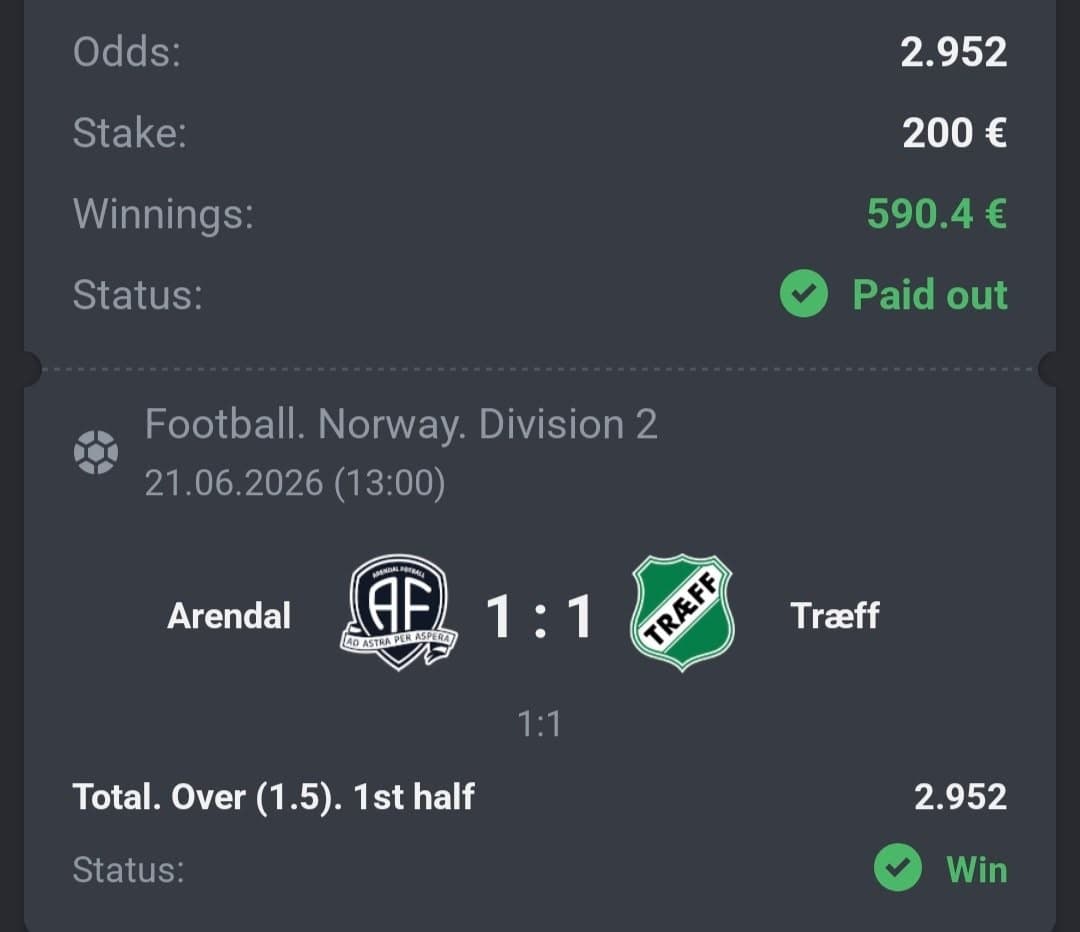
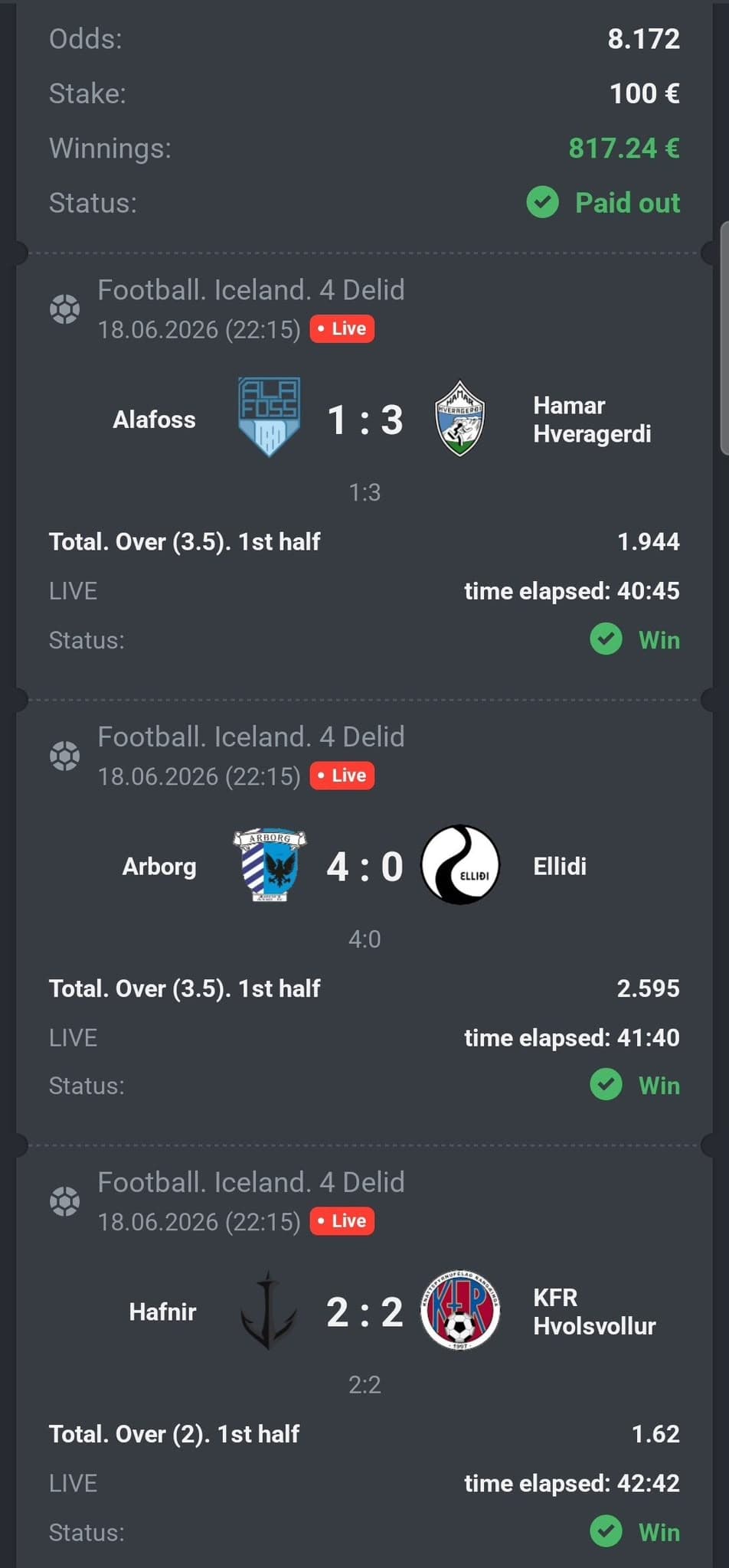
Sure Tips and Football Super Tips From The Experts
Matchplug is the world's most wanted hot prediction site with over 30 free betting tips markets.
Subscribe to any of our plans. We have suitable plans for your budget.
N 3,000
KSH 2,000
$ 25
(Monthly)Access to BASIC package markets
2 Odds to 3 Odds daily
Over 80% Accuracy
N 5,000
KSH 3,000
$ 50
(Monthly)Access to all BASIC package markets
5 Odds to 30 Odds daily
Over 85% Accuracy
N 20,000
KSH 10,000
$ 300
(Monthly)1.8 Odds to 3 Odds daily
Highest return on Investment (ROI)
Personal account VIP manager
Highest level of accuracy (95%) for high stakers.
Enjoying football should come with ease. We accept payments through any of the following channels
Here are our top expert football predictions and match previews
The World Cup final is the single most bet-on football match on the planet. For new fans and first-time bettors, the final brings a unique mix of pressure, history, and tactics that do not always behave like a normal match. This guide walks through what World Cup finals have actually looked like over the years, using verified historical data, so you understand what you are looking at once the two 2026 finalists are confirmed on July 19. best online pharmacy with fast delivery buy lyrica online with the lowest prices today in the USA This guide does not predict who will win the 2026 final or offer specific odds, since the two finalists are not yet known. What it gives you instead is a clear, research-based framework for reading the final once the matchup is set, built entirely on real World Cup final history. Who will win the 2026 World Cup? A common mistake new bettors make is treating the final like any other knockout match. It is not. The final carries a level of caution that even semifinals do not fully match. Up to and including the 2022 final, only 22 World Cup finals have been played across the tournament’s history, producing a combined total of 83 goals from 62 different players. That works out to well under 4 goals per final on average across more than nine decades of football, and recent finals have generally sat below the all-time average rather than above it. The lesson for bettors is simple. Whatever attacking reputation either finalist carries into the match, the final itself has a long history of being tighter and more cautious than the matches that got each team there. How often does the favourite actually win a World Cup final It is tempting to assume the team with the shorter odds before the final almost always lifts the trophy, but World Cup history shows the final is one of the more unpredictable fixtures in the tournament once two strong teams reach it. Shock results earlier in tournaments, like Saudi Arabia’s win over Argentina in the 2022 group stage, are a reminder that even heavily favoured teams can be beaten on a single bad day. The final adds extra layers of pressure, fatigue from a long tournament, and one-off matchups that do not always follow form. Rather than assuming the bookmakers’ favourite is a safe bet, new bettors should look at how each team arrived at the final. A team that needed penalties or extra time to get through the semifinal often arrives with less in the tank than a team that won comfortably in normal time. This kind of context tends to matter more in the final than raw squad reputation. Why do World Cup finals so often go to extra time One of the clearest patterns in World Cup final history is how often the match cannot be settled in 90 minutes. Three finals in history have gone all the way to a penalty shootout: Brazil’s win over Italy in 1994, Italy’s win over France in 2006, and Argentina’s win over France in 2022. Both the 1994 and 2006 shootout finals were preceded by extra time, and the 1994 final remains the only World Cup final in history where neither team scored across the full 120 minutes of play. This matters for betting because markets like “match to go to extra time” or “match to be decided on penalties” are not just trivia questions. They are realistic outcomes with real history behind them. Three shootouts in 22 finals means roughly one in seven finals has gone all the way to penalties, a far higher rate than a casual fan might assume looking at a single final in isolation. What the highest-scoring finals in history teach new bettors While many finals have been tight defensive battles, a handful have produced genuine goal fests, and these are worth understanding too. Four finals have finished with six total goals: Uruguay’s win over Argentina in 1930, Italy’s win over Hungary in 1938, France’s loss to Croatia in 2018, and France’s loss to Argentina in 2022. Notably, the two most recent finals before 2026 were both six-goal thrillers, breaking from the more typical pattern of cagey, low-scoring finals seen in many other decades. Brazil’s 5-2 win over Sweden in 1958 remains the largest winning margin in any World Cup final, while Brazil’s 4-1 win over Italy in 1970 and France’s 3-0 win over Brazil in 1998 are the only other finals settled by a three-goal margin. These blowout results are rare exceptions rather than the rule, but they show that when a final does open up, it can open up dramatically, particularly when one team’s game plan completely breaks down under pressure, as happened to Brazil in 1998. For a new bettor looking at the over/under market on the final, the realistic range based on history sits mostly between 1 and 4 goals, with the 6-goal finals in 2018 and 2022 standing out as recent exceptions rather than the new normal. The pattern of star players showing up in the biggest moment World Cup finals also have a notable history of being decided by individual brilliance from a small number of elite players, which matters for markets like anytime goalscorer in the final. Kylian Mbappe holds the record for most goals in World Cup finals with four, split between a goal against Croatia in 2018 and a hat trick against Argentina in 2022, making him the only player to score in two different finals more than once each. Pele, Vava, and Zinedine Zidane have each scored three goals across multiple finals, while only England’s Geoff Hurst in 1966 and Mbappe in 2022 have scored a hat trick in a final. This pattern suggests that when a final does produce goals, they are disproportionately likely to come from a team’s most recognised attacking player rather than spread evenly across the squad. New bettors looking at goalscorer markets should weigh a team’s
Read..African football fans have more to cheer for in 2026 than ever before. A record number of African nations will compete at this World Cup, and the continent arrives with real momentum after Morocco’s historic run in 2022. This guide explains who qualified, how African teams have performed historically, and how to think about their chances, so fans and bettors can follow the tournament with proper context. Can an African team win the world cup? When people search for World Cup winner tips, the conversation is usually dominated by the same handful of European and South American powerhouses. That is not unreasonable given history, but it overlooks a real shift happening in African football. Africa secured a record ten qualifying slots for this tournament, a jump driven directly by the expansion from 32 to 48 teams. More slots does not guarantee more knockout success, but it does mean more chances for an African nation to catch a favorable draw and make a run, the same way Morocco did in 2022. For a beginner trying to understand outright winner markets, the honest answer is that no African nation is likely to be a leading favorite to lift the trophy. The realistic and far more interesting question is which African teams are positioned to reach the knockout stage, and which of those could push for a quarterfinal or better. Which African nations qualified for the 2026 World Cup Ten African nations secured a place at the 2026 World Cup, the largest contingent the continent has ever sent. Senegal, Morocco, Egypt, Ghana, Algeria, Tunisia, Cote d’Ivoire, Cape Verde, and South Africa qualified automatically by topping their CAF groups, and DR Congo claimed the final spot by winning an intercontinental playoff against Jamaica. This list includes some notable absences. Nigeria fell at the playoff stage after losing to DR Congo on penalties, and Cameroon was also eliminated in the playoff round, meaning two of Africa’s traditionally biggest footballing nations will not be in the United States, Mexico, or Canada this summer. For fans of those countries, that is a genuine disappointment, but it also reflects how competitive African qualifying has become, with more nations capable of springing an upset. Cape Verde stands out as the lone debutant in this group, and a remarkable story in its own right. It is one of the smallest nations by population ever to reach a World Cup, and their qualification alone is already being treated as one of the feel-good stories heading into the tournament. Comparing this qualification haul to recent World Cup cycles It helps to put the number ten in context. Before the expansion to 48 teams, Africa typically sent five nations to the World Cup. The continent’s slot allocation rose directly because of the format change, not because CAF qualifying suddenly became easier. If anything, qualifying remained brutally competitive, since Nigeria and Cameroon, both multiple-time World Cup participants with strong football histories, missed out entirely. This matters for betting context because a bigger contingent does not automatically mean a stronger contingent. Spreading talent across ten nations instead of five can dilute strength in some cases, while in others it simply reflects genuine depth that did not have enough slots to show itself in earlier eras. Bettors should judge each of the ten teams on its own merits rather than assuming that more African teams means more African teams capable of reaching the knockout rounds. How African teams have performed at past World Cups This is where real history is genuinely useful, because it gives a grounded picture of what is realistic. Only four African nations have ever advanced past the World Cup quarterfinals: Cameroon in 1990 Senegal in 2002 Ghana in 2010 Morocco in 2022 That is the full list across the entire history of the tournament. It tells you that deep World Cup runs by African teams are rare events, even though they tend to be unforgettable when they happen. Cameroon’s 1990 run remains one of the most famous in World Cup history. Led by Roger Milla, the Indomitable Lions beat defending champions Argentina in the opening match and reached the quarterfinals before losing to England in extra time. Senegal repeated that quarterfinal feat in their very first World Cup appearance in 2002, beating defending champions France in their opener before eventually falling to Turkey in extra time in the quarterfinal. Ghana came agonisingly close to going one step further in 2010, only to be denied a semifinal spot by an infamous goal-line handball from Uruguay’s Luis Suarez, missing the resulting penalty, and eventually losing on a shootout. Morocco’s 2022 campaign is the standard every African nation will now be measured against. The Atlas Lions topped a difficult group containing Croatia, Belgium, and Canada, then beat Spain and Portugal in the knockout rounds before finally losing to France in the semifinal. It was the deepest run by any African or Arab nation in World Cup history, and it has clearly raised expectations for what is possible. Outside of those headline runs, African nations have had a longer record of competing well without always advancing. Nigeria has reached the round of 16 three separate times, in 1994, 1998, and 2014, without ever pushing further, and across World Cup history, African teams have combined for 37 tournament wins. The 2022 group stage as the best recent comparison point The most useful recent reference point for 2026 is actually the group stage of the 2022 tournament, where African teams collectively had one of their strongest showings ever. Senegal, Morocco, Tunisia, Ghana, and Cameroon were all still alive heading into the final round of group matches, and African sides combined to match their best-ever tally of group stage wins in a single tournament. There were only five defeats among African teams in that group stage, the fewest since 1990. A few of those results were genuine shocks relative to the FIFA rankings, including Tunisia’s win over France and Cameroon’s late win over Brazil, while others,
Read..The 2026 World Cup is the first in history to be shared by three host nations. The United States, Mexico, and Canada will stage matches between June 11 and July 19. This unusual setup raises an interesting question for both new bettors and football fans who wish to place reliable soccer odds. Does playing at home actually help a team at the World Cup, and if so, by how much? This guide examines the actual historical record of host nations, breaks down the roles of the USA, Mexico, and Canada within that history, and explains how to consider home advantage when evaluating bets. Who will win the 2026 World Cup? Before looking at any specific team, it helps to understand what “home advantage” actually means at a World Cup. It is not the same as home advantage in a club league season. A host nation still has to qualify for the tournament on merit in most cases, although hosts are automatically guaranteed a place, so squad quality varies a lot from host to host. What every host shares is a set of common advantages. They play every group match in their own country, often in stadiums they know well. Their fans dominate the crowd. Travel and time zone disruption are minimal compared to a normal away tournament. These factors are real, but as this guide will show, they have not always been enough to overcome a gap in playing quality. How often do World Cup hosts actually outperform their normal level? This is the most useful statistic for a new bettor to understand. According to a USA Today analysis using all-time World Cup scoring data, hosts have outperformed their usual World Cup pace in roughly two out of three cases historically. More precisely, in 16 of the 22 World Cups played between 1930 and 2022, the host nation finished with more points per match than that country’s all-time World Cup average. That works out to roughly a 73 per cent rate of hosts performing better than their historical norm. This is a meaningful number. It suggests that home advantage is a real, measurable effect rather than just a feel-good narrative repeated by broadcasters. At the same time, it is important to understand what this statistic does and does not tell you. It compares a host’s performance to that same nation’s own history, not to the rest of the tournament field. A weak footballing nation that slightly outperforms its own poor historical average is still likely to lose most of its matches against stronger opposition. The hosts who underperformed and what went wrong Not every host benefit from home advantage. Six tournaments out of the 22 studied saw the host fail to outperform its own historical average, and two more simply matched their usual level rather than improving on it. The clearest example of home advantage failing to help was Spain in 1982. Spain averaged just 1 point per match as the host, well below their normal historical average of 1.64 points per match, and they exited in the second round. Brazil in 2014 is the most famous case for a different reason. Brazil reached the semifinals as host, which sounds like a reasonable run, but the manner of their exit, a 7-1 defeat to Germany, turned hosting from an advantage into a source of unbearable pressure. Brazil’s case is a useful reminder that home advantage can just as easily amplify pressure and expectation as it can lift performance, especially for a nation with a strong football history and high public expectations. Qatar in 2022 stands as the most extreme example. Qatar’s only World Cup appearance came as host, and they became the worst-performing host nation in tournament history, failing to win a single match. This shows that home advantage cannot manufacture quality that is not already present in a national team. Qatar had not built the kind of long-term footballing depth that other hosts like France or England had, and home support alone could not close that gap against far more experienced opposition. Why does the modern era look different from older tournaments There is a clear historical pattern worth understanding before applying any of this to 2026. From the first World Cup in 1930 through 1998, six different hosts went on to win the tournament outright, including Uruguay in 1930, Italy in 1934, England in 1966, West Germany in 1974, Argentina in 1978, and France in 1998. That works out to roughly a 27 per cent win rate for hosts across that period, which is a very high number given that anywhere from 13 to 32 teams competed across those tournaments. Since France won at home in 1998, no host nation has won the World Cup. South Korea and Japan in 2002, Germany in 2006, South Africa in 2010, Brazil in 2014, Russia in 2018, and Qatar in 2022 all hosted without lifting the trophy. The common explanation among football analysts is that the game has globalised significantly since the late 1990s. Top players from rival nations now play week to week in the host country’s domestic league, reducing unfamiliarity. Broadcasting and analysis have made all team’s tactics and personnel far easier to study in advance, which reduces the surprise factor that used to benefit hosts. Crowds have also become more international and mixed at many venues, partly because World Cup tickets are expensive and often purchased by travelling fans and tourists rather than exclusively by host nation supporters. A useful pattern from this more recent stretch, often called the modern era of hosting, is that a typical host’s ceiling has been the quarterfinals. Hosts in the last six tournaments before 2026 have generally topped out around that stage rather than consistently challenging for the title, with most exits coming in the group stage, Round of 16, or quarterfinals. How Mexico’s host history compares to other repeat hosts Mexico enters 2026 as the only nation to host the World Cup three times, having previously staged the tournament in 1970 and
Read..The Colorado Rapids have added an explosive wide option, acquiring Georgi Minoungou from Seattle Sounders FC, the clubs announced Friday. Seattle will receive million in General Allocation Money split evenly over the next two seasons and retain a sell-on percentage. best online pharmacy with fast delivery buy levitra super force online with the lowest prices today in the USA Minoungou, 23, joined Seattle in August 2024 from MLS NEXT Pro affiliate Tacoma Defiance and made 53 appearances across all competitions, recording three goals and seven assists. He was part of the Sounders squad that won the Leagues Cup in 2025. best online pharmacy with fast delivery buy hypernil online with the lowest prices today in the USA At the international level, Minoungou has one goal in eight caps for Burkina Faso and featured in every match during the Stallions’ run to the Round of 16 at the 2025 Africa Cup of Nations. Rapids sporting director Fran Taylor highlighted what makes Minoungou stand out. “He’s an explosive winger who brings the ability to consistently win 1v1 situations,” Taylor said. “There are few players like him in MLS, and we believe he’s a strong fit for how we want to play.” Sounders general manager Craig Waibel wished the young winger well after his time in the Pacific Northwest. “We are proud of how he has developed and moved up the pathway within our system,” Waibel said. Colorado are in their first season under head coach Matt Wells and are aiming to return to the MLS Cup Playoffs. Seattle, meanwhile, have already qualified for the Concacaf Champions Cup quarterfinals in Brian Schmetzer’s 10th full season as head coach, the longest active tenure of any manager in MLS.
Read..Here are the latest news to keep you updated.
Klopp Backs Salah To Play On Until 40 After Liverpool Exit Confirmed
Jurgen Klopp believes Mohamed Salah could continue playing until the age of 40, describing his former player as irreplaceable after the Egyptian confirmed he will leave Liverpool at the end of the season. Salah, 33, announced his departure from Anfield this week, bringing to a close one of the most decorated spells any player has enjoyed at the club. best online pharmacy with fast delivery buy prednisolone online with the lowest prices today in the USA Since Klopp signed him from Roma in 2017, Salah has helped Liverpool win two Premier League titles, the Champions League, the FIFA Club World Cup, the UEFA Super Cup, the FA Cup, two EFL Cups and a Community Shield. Speaking to the BBC ahead of a Legends charity match in Liverpool on Saturday, Klopp paid a glowing tribute to his former forward. “He set completely new standards for a professional football player, how hard you can work, how much you can invest in recovery and everything,” Klopp said. “Now he leaves here, but I would not be surprised if he plays another six or seven years.” The German also reflected on what made the partnership between Salah and the club so special. “Mo and I had big dreams, but we didn’t dare to dream that big,” he said. best online pharmacy with fast delivery buy desyrel online with the lowest prices today in the USA “I really think the whole relationship was a fair deal. An exceptional player, exceptional numbers, and he earned some money, of course. And now he can go wherever he wants, and the club will have to find, and will find, other players, and that’s absolutely okay.” Klopp, who left Liverpool in 2024, signed off with a simple but heartfelt verdict on Salah’s legacy. “He’s an all-time great without a shadow of a doubt, and I’m really proud to be a part of that career.”
Mar 30, 2026
Arsenal's Alvarez Pursuit Could Put Gyokeres Future In Doubt
With the transfer window still a couple of months away, clubs are already mapping out their summer business, and Arsenal appear to be no different as they continue their push to reach the next level under Mikel Arteta.Fabregas Eyed For Chelsea Role But Concerns Over Club Instability Could Put Him Off Arteta has steadily built one of the most competitive squads in the Premier League since taking charge at the Emirates, even if the major trophies have so far eluded him. The Arsenal board have backed him heavily in the transfer market, bringing in the likes of Declan Rice, Martin Zubimendi, Mikel Merino and Viktor Gyokeres for significant fees. On the whole, those signings have been considered a success. Gyokeres in particular has contributed 16 goals and three assists across all competitions, with his 11 Premier League goals making him the club’s top scorer by at least five goals. However, despite those numbers, there is a sense that the Swedish striker has not consistently lit up games or contributed enough beyond his goals. That growing feeling appears to be influencing Arsenal’s thinking in the transfer market, with reports suggesting the club are exploring a move for Atletico Madrid forward Julian Alvarez. If Arsenal do push ahead with a move for Alvarez, it would raise serious questions about Gyokeres’ long-term future at the club, having only joined relatively recently for a substantial fee.
Mar 30, 2026
Raya On Course For Third Straight Golden Glove Despite Spain Snub
David Raya is enjoying the finest season of his career, yet the Arsenal goalkeeper finds himself in the curious position of being one of the best keepers in the world while remaining second choice for Spain. The Spaniard is on track to win a third consecutive Premier League Golden Glove, which would make him only the second player after compatriot Pepe Reina to achieve that feat. Across all competitions, Raya has kept an extraordinary 21 clean sheets in 40 games, with 15 of those coming in the league, more than any other goalkeeper in Europe. His form has been central to Arsenal’s bid for a first Premier League title in 22 years, and their progress to the Champions League quarter-finals, where they beat Bayer Leverkusen. After keeping another clean sheet in that tie, Arsenal legend Thierry Henry was effusive in his praise. “This guy should be in contention to be player of the season because what he does for Arsenal every single time is outstanding,” Henry said. “He can make you hope that you’re not losing by making saves, and he does that two to three times every single game.” Teammate Declan Rice was equally fulsome, pointing to Raya’s work ethic in training as the foundation of his performances. “The intensity he trains at, the level he trains at, there is no reason why he is not doing what he is doing on the pitch,” Rice said. “He has turned into a real leader for us and when you have a keeper like that it gives everyone confidence.” Raya has been nominated for both Premier League Player of the Month and Save of the Month for March and is expected to be in the running for end-of-season individual awards. Despite all of that, when he links up with the Spanish national team for friendlies against Serbia and Egypt, he will do so as backup to Athletic Club’s Unai Simon, who remains Luis de la Fuente’s first choice between the posts.
Mar 30, 2026
Why Salah Deserves To Stand Alongside Liverpool's All-Time Greats
Mohamed Salah’s confirmation that he will leave Liverpool at the end of the season has prompted a wave of reflection on a career at Anfield that deserves to be spoken about in the same breath as the club’s most celebrated figures. The numbers alone make a compelling case. Since joining from Roma in 2017, Salah has scored 255 goals in all competitions, placing him third in Liverpool’s all-time scoring charts behind only Ian Rush (346) and Roger Hunt (285). Crucially, both Rush and Hunt were centre-forwards, making Salah’s tally as a winger all the more remarkable. He reached his first century of goals in just 151 games, a club record, and his 44-goal haul in his debut season has only ever been bettered by Rush’s 47 in 1983/84. His creative output is equally impressive. Salah has created more chances from open play in the Premier League than any other player across his nine seasons at the club, totalling 534. He currently has 119 assists overall, with 92 coming in the league, a Reds record he shares with Steven Gerrard. best online pharmacy with fast delivery buy periactin online with the lowest prices today in the USA One more top-flight assist would see him stand alone at the top of that particular list. Last season was arguably his finest, contributing 29 goals and 18 assists in the Premier League, with those 47 goal involvements in a single 38-game campaign the highest ever recorded. He is also closing in on Gerrard’s all-time Liverpool penalty record of 47, with Salah currently on 46 and games still to play. best online pharmacy with fast delivery buy phenergan online with the lowest prices today in the USA In Europe, Salah holds the club’s best scoring record, netting 48 of his 53 continental goals in the Champions League. His trophy cabinet reflects a career of sustained excellence, including a Champions League title, two Premier League titles, the FIFA Club World Cup, the UEFA Super Cup, an FA Cup and two League Cups. Away from the statistics, the moments stand out too. The hat-trick at Manchester United, the goals against Manchester City, the long-range strike against Chelsea and countless other memorable efforts have cemented his place in Liverpool folklore. Add to that an extraordinary disciplinary record of just 11 yellow cards across nine seasons, despite the physical treatment regularly dished out to him, and the full picture of what Salah has given to the club becomes even clearer. This season has been more difficult, with 10 goals and nine assists in 33 appearances and a well-publicised falling out with manager Arne Slot casting a shadow over his final months at the club. The timing of his exit feels right for both parties. Legendary status at Liverpool has always been a subjective matter, but few players in the club’s history can claim to have contributed more. Salah has more than earned his place among the greats.
Mar 30, 2026
Targett Double Fires Middlesbrough Past Birmingham
Defender Matt Targett scored twice as Middlesbrough beat Birmingham 3-1 in the Championship on Monday, tightening their hold on the second automatic promotion spot. Boro had gone three games without a win and their place in the top two was beginning to look shaky, but Targett stepped up as an unlikely match winner to get Kim Hellberg’s side back on track in their bid to return to the Premier League for the first time since 2017. The former Aston Villa left-back opened the scoring on 13 minutes, running onto a long ball from Aidan Morris before steering a finish past Birmingham goalkeeper James Beadle at St Andrew’s.
Mar 8, 2026
Matusiwa Strike Sends Ipswich Into Third With Win Over Hull
Ipswich strengthened their promotion push with a narrow 1-0 victory over fellow top-six contenders Hull on Tuesday. The only goal of the game came in the 71st minute when midfielder Azor Matusiwa fired in from the edge of the box to give Kieran McKenna’s side all three points at Portman Road. The win was Ipswich’s third in a row and lifted them above Millwall into third place in the Championship standings. They now trail second-placed Middlesbrough by three points, although they have a game in hand as the battle for automatic promotion continues to heat up. Sonnet 4.6
Mar 8, 2026
2026 World Cup BTTS Tips: Best Both Teams to Score Predictions
Both teams to score, usually shortened to BTTS, is one of the most searched football betting markets at every major tournament. It is a simple idea that new fans pick up quickly, but understanding when BTTS is more or less likely to land takes a bit more digging. This guide walks through how the market works, what the data from recent World Cups tells us, and how to apply that thinking heading into the 2026 tournament in the United States, Mexico, and Canada. What does both teams to score mean in football betting A BTTS bet wins if both teams find the net at least once during the 90 minutes plus stoppage time. It does not matter who wins the match or by how much. A 4-1 win counts as a BTTS winner just as much as a 1-1 draw does. Extra time and penalty shootouts in knockout matches are not included, since the bet is settled on the result at the end of normal time and stoppage time. This market is popular because it sidesteps two harder questions, who wins and by how much, and replaces them with one simpler question, will both sides manage to score. For a beginner, that makes it feel more approachable than match result or correct score markets, even though predicting it well still requires some thought. Who will win the 2026 World Cup betting tips and how that connects to BTTS Punters chasing outright winner tips often look at the same team data that BTTS bettors need, just from a different angle. A team built around defensive solidity and game management, the kind of team that often goes deep into a tournament, tends to be involved in fewer BTTS matches because their opponents struggle to break them down. A team built around fast attacking transitions can be more exciting to back for the outright title, but their matches often see goals at both ends, since their own defensive shape can be more exposed in the process. Knowing this connection helps you avoid backing contradictory bets. If you believe a team is going all the way to the final because of their defensive discipline, that same belief should make you cautious about backing BTTS yes in their matches, especially in the knockout rounds. How BTTS connects to clean sheets and why that matters There is no need to guess at BTTS rates directly, since clean sheet data tells most of the story. If a team keeps a clean sheet, BTTS automatically loses, because the other side failed to score. best online pharmacy with fast delivery buy methocarbamol online with the lowest prices today in the USA This means clean sheet trends are one of the most useful tools for thinking about BTTS likelihood at a World Cup. Clean sheet rates have been rising at recent World Cups. 38 per cent of matches at the 2022 World Cup in Qatar saw at least one team keep a clean sheet, up from 35 per cent at the 2018 tournament in Russia and 33 per cent at the 2014 tournament in Brazil. That is a clear upward trend across three consecutive tournaments, and it points toward defenses becoming better organized at the international level over time. For a beginner, the practical reading is this. In recent tournaments, roughly one in three matches ended with at least one clean sheet, which by definition rules out a BTTS win. That puts a rough ceiling on how often BTTS yes can land across a full tournament, even before you start looking at individual matchups. Group stage versus knockout stage BTTS patterns Just like with the over/under goals market, BTTS behaves differently depending on the stage of the tournament, and the clean sheet data shows this clearly. Group stage clean sheets sat at 34 per cent in recent tournaments, compared to 44 per cent in the knockout phase. Since a clean sheet rules out BTTS yes, a higher clean sheet rate in the knockout rounds means BTTS yes becomes harder to land as the tournament progresses. This lines up with the broader pattern in goals per match. Group games have averaged 2.69 goals per match across recent tournaments, compared to 2.31 in the knockout rounds, supporting the idea that group stage football tends to be more open. Teams in the group stage sometimes need a specific result to advance, which can push both sides to commit players forward even when it is risky, while underdogs with less to lose in early matches may also play more freely than they would later in the competition. Once the knockout stage begins, single elimination changes team behavior. A mistake ends the tournament, so coaches tend to prioritize defensive solidity over open, attacking risk taking. This naturally makes BTTS yes a tougher bet to back blindly in the later rounds, even when two attack-minded teams are involved, since the stakes alone tend to produce more conservative game plans. What goal timing data tells us about BTTS patterns A detailed academic comparison of the 2018 and 2022 World Cups looked closely at how and when goals were scored across both tournaments. The study found that in both tournaments, the majority of goals were scored in the second half and especially toward the end of matches. This pattern matters for BTTS bettors who like to follow a match in progress, sometimes called in-play betting, since a 0-0 or 1-0 scoreline at halftime does not necessarily mean BTTS yes is dead. A lot of World Cup goal scoring history shows games opening up in the final third of the match, as fatigue sets in and teams chasing a result start taking more risks. The same study also found a difference in how goals were created between the two tournaments. best online pharmacy with fast delivery buy zofran online with the lowest prices today in the USA There was an increase in goals scored from open play, particularly positional attacks, in 2022 compared to 2018, while the 2018
Jun 22, 2026
2026 World Cup Final Betting Guide: How to Read the Showpiece Match
The World Cup final is the single most bet-on football match on the planet. For new fans and first-time bettors, the final brings a unique mix of pressure, history, and tactics that does not always behave like a normal match. This guide walks through what World Cup finals have actually looked like over the years, using verified historical data, so you understand what you are looking at once the two 2026 finalists are confirmed on July 19. This guide does not predict who will win the 2026 final or offer specific odds, since the two finalists are not yet known. What it gives you instead is a clear, research based framework for reading the final once the matchup is set, built entirely on real World Cup final history. Who will win the 2026 World Cup betting tips start with understanding finals are different A common mistake new bettors make is treating the final like any other knockout match. It is not. The final carries a level of caution that even semifinals do not fully match. Up to and including the 2022 final, only 22 World Cup finals have been played across the tournament’s history, producing a combined total of 83 goals from 62 different players. That works out to well under 4 goals per final on average across more than nine decades of football, and recent finals have generally sat below the all-time average rather than above it. The lesson for new bettors is simple. Whatever attacking reputation either finalist carries into the match, the final itself has a long history of being tighter and more cautious than the matches that got each team there. How often the favourite actually wins a World Cup final It is tempting to assume the team with the shorter odds before the final almost always lifts the trophy, but World Cup history shows the final is one of the more unpredictable fixtures in the tournament once two strong teams reach it. Shock results earlier in tournaments, like Saudi Arabia’s win over Argentina in the 2022 group stage, are a reminder that even heavily favoured teams can be beaten on a single bad day. The final adds extra layers of pressure, fatigue from a long tournament, and one-off matchups that do not always follow form. Rather than assuming the bookmakers’ favourite is a safe bet, new bettors should look at how each team arrived at the final. A team that needed penalties or extra time to get through the semifinal often arrives with less in the tank than a team that won comfortably in normal time. This kind of context tends to matter more in the final than raw squad reputation. Why World Cup finals so often go to extra time One of the clearest patterns in World Cup final history is how often the match cannot be settled in 90 minutes. Three finals in history have gone all the way to a penalty shootout: Brazil’s win over Italy in 1994, Italy’s win over France in 2006, and Argentina’s win over France in 2022. Both the 1994 and 2006 shootout finals were preceded by extra time, and the 1994 final remains the only World Cup final in history where neither team scored across the full 120 minutes of play. This matters for betting because markets like “match to go to extra time” or “match to be decided on penalties” are not just trivia questions. They are realistic outcomes with real history behind them. Three shootouts in 22 finals means roughly one in seven finals has gone all the way to penalties, a far higher rate than a casual fan might assume looking at a single final in isolation. What the highest-scoring finals in history teach new bettors While many finals have been tight defensive battles, a handful have produced genuine goal fests, and these are worth understanding too. Four finals have finished with six total goals: Uruguay’s win over Argentina in 1930, Italy’s win over Hungary in 1938, France’s loss to Croatia in 2018, and France’s loss to Argentina in 2022. Notably, the two most recent finals before 2026 were both six-goal thrillers, breaking from the more typical pattern of cagey, low-scoring finals seen in many other decades. Brazil’s 5-2 win over Sweden in 1958 remains the largest winning margin in any World Cup final, while Brazil’s 4-1 win over Italy in 1970 and France’s 3-0 win over Brazil in 1998 are the only other finals settled by a three goal margin. These blowout results are rare exceptions rather than the rule, but they show that when a final does open up, it can open up dramatically, particularly when one team’s game plan completely breaks down under pressure, as happened to Brazil in 1998. For a new bettor looking at the over/under market on the final, the realistic range based on history sits mostly between 1 and 4 goals, with the 6-goal finals in 2018 and 2022 standing out as recent exceptions rather than the new normal. The pattern of star players showing up in the biggest moment World Cup finals also have a notable history of being decided by individual brilliance from a small number of elite players, which matters for markets like anytime goalscorer in the final. Kylian Mbappe holds the record for most goals in World Cup finals with four, split between a goal against Croatia in 2018 and a hat trick against Argentina in 2022, making him the only player to score in two different finals more than once each. Pele, Vava, and Zinedine Zidane have each scored three goals across multiple finals, while only England’s Geoff Hurst in 1966 and Mbappe in 2022 have scored a hat trick in a final. This pattern suggests that when a final does produce goals, they are disproportionately likely to come from a team’s most recognised attacking player rather than spread evenly across the squad. New bettors looking at goalscorer markets should weigh a team’s primary attacking threat heavily, since finals history shows
Jun 22, 2026
Why Kenyan Betting Markets Are Changing How Americans Think About Sports Wagering
I’ve been deep in sports betting for 18 months now, and something unexpected happened. Americans started paying attention to Kenya for betting strategies, which seemed random until I dug into what’s actually happening there. Most of us are still fighting about legalization timelines and which apps have the slickest interface. Meanwhile, Kenyan bettors built prediction communities that make our forum arguments look amateurish. We’re talking verified track records, actual accountability systems, and claims of 73% accuracy you can actually check instead of just trusting some influencer’s screenshot. My buddy Jake went down this rabbit hole last March and within four months his NFL picks got 23% better. Not from blindly tailing Kenyan bets but because he absorbed a completely different analytical framework that emphasized statistical depth most American recreational bettors won’t touch. What Makes International Betting Communities Different American sports betting works pretty well. Great platforms, competitive odds, more data feeds than anyone could process. But we’ve got this recency bias problem that screws up judgment more than most people admit. I ran my own test last season. Found 30 NFL games where public money was absolutely lopsided (80%+ on one side). Those heavy favorites only covered 12 times. That’s 40% when the crowd felt most certain. Now look at what happens when you bet in kenya using approaches that prioritize systematic analysis over emotional reactions. The betting culture there emphasizes long-term ROI instead of short-term dopamine hits from crazy parlays. You won’t find nearly as many bettors chasing those 1000-to-1 lottery tickets. Instead there’s this methodical grind focused on building bankrolls through consistent selections in that 2.5 to 4.0 odds range. The $47 Lesson That Changed My Approach Three seasons back I lost $47 on Rams versus Cardinals on a Thursday night. I was absolutely certain about the over because both defenses had gotten torched for 30+ points the week before. Final score was 17-13. Total of 30 points when I needed 48.5 to cash. That loss taught me something valuable. I’d made this classic mistake of assuming recent performance automatically predicts what happens next without considering context. Weather conditions had shifted significantly. Two key defensive players came back from injury for both teams. Kenyan betting methodology treats contextual factors as completely non-negotiable. Before placing anything serious, bettors there typically review 8-10 factors minimum. Injuries sure, but also referee assignments, travel schedules, playing surface conditions, even kickoff times relative to each team’s home time zone. Exhausting. Absolutely. But it works when you’re trying to build an edge instead of just gambling for entertainment. How Pattern Recognition Beats Gut Feelings We Americans really love our gut feelings about sports. Problem is your gut is probably bleeding money. I started tracking my “gut feel” bets separately from my “spreadsheet” bets back in October 2024. By January 2025 the numbers were frankly embarrassing. Gut feel bets hit at 42% accuracy while spreadsheet bets where I actually invested 20 minutes of research hit at 61%. That 19 percentage point gap matters. Over 100 bets at $50 average stake we’re talking roughly $950 in variance just from slowing down enough to think critically. My spreadsheet methodology came almost entirely from studying how international betting communities approach match analysis, particularly Kenyan and European bettors. They genuinely don’t care about storylines or revenge game narratives that American sports media obsesses over. They care about expected goals metrics, possession percentages in similar tactical matchups, and how specific teams perform against particular defensive setups. Breaking Down the Numbers Game Most casual bettors don’t realize you don’t need to win 60% of your bets to make money. You need to win enough bets at the right odds to overcome the vigorish that sportsbooks charge. Simple math. If you’re betting standard -110 lines, you need to win 52.4% just to break even. Win 54% consistently and you’re profitable. Win 57% and you’re doing better than most people who call themselves professional bettors. But Americans chase higher odds constantly because we love that lottery ticket feeling. I’ve definitely done it myself, throwing $20 on a five-team parlay at +2847 odds because the potential payout seemed fun. Except over 500 of those bets you’ll lose way more than you could ever win back, and the math doesn’t care about how exciting it felt. Kenyan betting markets have taught American bettors who actually pay attention that boring wins games. Singles and doubles at 2.0 to 3.5 odds that you actually researched will build your bankroll steadily. Flashy 10-team parlays make for good bar stories but they empty wallets faster than almost anything else. The Technology Factor Nobody Talks About Mobile betting changed absolutely everything here. You can place bets from your couch at 2:47pm on a random Tuesday while eating lunch. That convenience is amazing for accessibility but also genuinely dangerous for bankroll management. Way too easy to make impulse bets now without any friction to slow you down. I’ve watched friends lose hundreds of dollars because they saw a halftime score and made impulse comeback bets they never would’ve driven 30 minutes to a physical casino to place but they’ll do it from their phone in 8 seconds without a second thought International platforms particularly in markets like Kenya often build in intentional friction points. Not because they don’t want your money but because impulsive betting isn’t sustainable. You’ll blow your entire bankroll in three weeks and leave the platform. They actually want long-term customers who bet regularly and methodically. Some American sportsbooks are finally starting to adopt similar protective features. Deposit limits you can set yourself. Mandatory cool-off periods. Reality checks that show your month-to-date profit and loss. Nothing revolutionary but they genuinely help reduce impulse betting. What Actually Works for American Sports Let me get practical because you’re probably not going to spend three hours analyzing every bet. I don’t either most of the time. You can still improve your approach significantly with some basic rules. Never bet more than 3% of your total bankroll
May 23, 2026
2026 World Cup BTTS Tips: Best Both Teams to Score Predictions
Both teams to score, usually shortened to BTTS, is one of the most searched football betting markets at every major tournament. It is a simple idea that new fans pick up quickly, but understanding when BTTS is more or less likely to land takes a bit more digging. This guide walks through how the market works, what the data from recent World Cups tells us, and how to apply that thinking heading into the 2026 tournament in the United States, Mexico, and Canada. What does both teams to score mean in football betting A BTTS bet wins if both teams find the net at least once during the 90 minutes plus stoppage time. It does not matter who wins the match or by how much. A 4-1 win counts as a BTTS winner just as much as a 1-1 draw does. Extra time and penalty shootouts in knockout matches are not included, since the bet is settled on the result at the end of normal time and stoppage time. This market is popular because it sidesteps two harder questions, who wins and by how much, and replaces them with one simpler question, will both sides manage to score. For a beginner, that makes it feel more approachable than match result or correct score markets, even though predicting it well still requires some thought. Who will win the 2026 World Cup betting tips and how that connects to BTTS Punters chasing outright winner tips often look at the same team data that BTTS bettors need, just from a different angle. A team built around defensive solidity and game management, the kind of team that often goes deep into a tournament, tends to be involved in fewer BTTS matches because their opponents struggle to break them down. A team built around fast attacking transitions can be more exciting to back for the outright title, but their matches often see goals at both ends, since their own defensive shape can be more exposed in the process. Knowing this connection helps you avoid backing contradictory bets. If you believe a team is going all the way to the final because of their defensive discipline, that same belief should make you cautious about backing BTTS yes in their matches, especially in the knockout rounds. How BTTS connects to clean sheets and why that matters There is no need to guess at BTTS rates directly, since clean sheet data tells most of the story. If a team keeps a clean sheet, BTTS automatically loses, because the other side failed to score. best online pharmacy with fast delivery buy methocarbamol online with the lowest prices today in the USA This means clean sheet trends are one of the most useful tools for thinking about BTTS likelihood at a World Cup. Clean sheet rates have been rising at recent World Cups. 38 per cent of matches at the 2022 World Cup in Qatar saw at least one team keep a clean sheet, up from 35 per cent at the 2018 tournament in Russia and 33 per cent at the 2014 tournament in Brazil. That is a clear upward trend across three consecutive tournaments, and it points toward defenses becoming better organized at the international level over time. For a beginner, the practical reading is this. In recent tournaments, roughly one in three matches ended with at least one clean sheet, which by definition rules out a BTTS win. That puts a rough ceiling on how often BTTS yes can land across a full tournament, even before you start looking at individual matchups. Group stage versus knockout stage BTTS patterns Just like with the over/under goals market, BTTS behaves differently depending on the stage of the tournament, and the clean sheet data shows this clearly. Group stage clean sheets sat at 34 per cent in recent tournaments, compared to 44 per cent in the knockout phase. Since a clean sheet rules out BTTS yes, a higher clean sheet rate in the knockout rounds means BTTS yes becomes harder to land as the tournament progresses. This lines up with the broader pattern in goals per match. Group games have averaged 2.69 goals per match across recent tournaments, compared to 2.31 in the knockout rounds, supporting the idea that group stage football tends to be more open. Teams in the group stage sometimes need a specific result to advance, which can push both sides to commit players forward even when it is risky, while underdogs with less to lose in early matches may also play more freely than they would later in the competition. Once the knockout stage begins, single elimination changes team behavior. A mistake ends the tournament, so coaches tend to prioritize defensive solidity over open, attacking risk taking. This naturally makes BTTS yes a tougher bet to back blindly in the later rounds, even when two attack-minded teams are involved, since the stakes alone tend to produce more conservative game plans. What goal timing data tells us about BTTS patterns A detailed academic comparison of the 2018 and 2022 World Cups looked closely at how and when goals were scored across both tournaments. The study found that in both tournaments, the majority of goals were scored in the second half and especially toward the end of matches. This pattern matters for BTTS bettors who like to follow a match in progress, sometimes called in-play betting, since a 0-0 or 1-0 scoreline at halftime does not necessarily mean BTTS yes is dead. A lot of World Cup goal scoring history shows games opening up in the final third of the match, as fatigue sets in and teams chasing a result start taking more risks. The same study also found a difference in how goals were created between the two tournaments. best online pharmacy with fast delivery buy zofran online with the lowest prices today in the USA There was an increase in goals scored from open play, particularly positional attacks, in 2022 compared to 2018, while the 2018
Jun 22, 2026
2026 World Cup Final Betting Guide: How to Read the Showpiece Match
The World Cup final is the single most bet-on football match on the planet. For new fans and first-time bettors, the final brings a unique mix of pressure, history, and tactics that does not always behave like a normal match. This guide walks through what World Cup finals have actually looked like over the years, using verified historical data, so you understand what you are looking at once the two 2026 finalists are confirmed on July 19. This guide does not predict who will win the 2026 final or offer specific odds, since the two finalists are not yet known. What it gives you instead is a clear, research based framework for reading the final once the matchup is set, built entirely on real World Cup final history. Who will win the 2026 World Cup betting tips start with understanding finals are different A common mistake new bettors make is treating the final like any other knockout match. It is not. The final carries a level of caution that even semifinals do not fully match. Up to and including the 2022 final, only 22 World Cup finals have been played across the tournament’s history, producing a combined total of 83 goals from 62 different players. That works out to well under 4 goals per final on average across more than nine decades of football, and recent finals have generally sat below the all-time average rather than above it. The lesson for new bettors is simple. Whatever attacking reputation either finalist carries into the match, the final itself has a long history of being tighter and more cautious than the matches that got each team there. How often the favourite actually wins a World Cup final It is tempting to assume the team with the shorter odds before the final almost always lifts the trophy, but World Cup history shows the final is one of the more unpredictable fixtures in the tournament once two strong teams reach it. Shock results earlier in tournaments, like Saudi Arabia’s win over Argentina in the 2022 group stage, are a reminder that even heavily favoured teams can be beaten on a single bad day. The final adds extra layers of pressure, fatigue from a long tournament, and one-off matchups that do not always follow form. Rather than assuming the bookmakers’ favourite is a safe bet, new bettors should look at how each team arrived at the final. A team that needed penalties or extra time to get through the semifinal often arrives with less in the tank than a team that won comfortably in normal time. This kind of context tends to matter more in the final than raw squad reputation. Why World Cup finals so often go to extra time One of the clearest patterns in World Cup final history is how often the match cannot be settled in 90 minutes. Three finals in history have gone all the way to a penalty shootout: Brazil’s win over Italy in 1994, Italy’s win over France in 2006, and Argentina’s win over France in 2022. Both the 1994 and 2006 shootout finals were preceded by extra time, and the 1994 final remains the only World Cup final in history where neither team scored across the full 120 minutes of play. This matters for betting because markets like “match to go to extra time” or “match to be decided on penalties” are not just trivia questions. They are realistic outcomes with real history behind them. Three shootouts in 22 finals means roughly one in seven finals has gone all the way to penalties, a far higher rate than a casual fan might assume looking at a single final in isolation. What the highest-scoring finals in history teach new bettors While many finals have been tight defensive battles, a handful have produced genuine goal fests, and these are worth understanding too. Four finals have finished with six total goals: Uruguay’s win over Argentina in 1930, Italy’s win over Hungary in 1938, France’s loss to Croatia in 2018, and France’s loss to Argentina in 2022. Notably, the two most recent finals before 2026 were both six-goal thrillers, breaking from the more typical pattern of cagey, low-scoring finals seen in many other decades. Brazil’s 5-2 win over Sweden in 1958 remains the largest winning margin in any World Cup final, while Brazil’s 4-1 win over Italy in 1970 and France’s 3-0 win over Brazil in 1998 are the only other finals settled by a three goal margin. These blowout results are rare exceptions rather than the rule, but they show that when a final does open up, it can open up dramatically, particularly when one team’s game plan completely breaks down under pressure, as happened to Brazil in 1998. For a new bettor looking at the over/under market on the final, the realistic range based on history sits mostly between 1 and 4 goals, with the 6-goal finals in 2018 and 2022 standing out as recent exceptions rather than the new normal. The pattern of star players showing up in the biggest moment World Cup finals also have a notable history of being decided by individual brilliance from a small number of elite players, which matters for markets like anytime goalscorer in the final. Kylian Mbappe holds the record for most goals in World Cup finals with four, split between a goal against Croatia in 2018 and a hat trick against Argentina in 2022, making him the only player to score in two different finals more than once each. Pele, Vava, and Zinedine Zidane have each scored three goals across multiple finals, while only England’s Geoff Hurst in 1966 and Mbappe in 2022 have scored a hat trick in a final. This pattern suggests that when a final does produce goals, they are disproportionately likely to come from a team’s most recognised attacking player rather than spread evenly across the squad. New bettors looking at goalscorer markets should weigh a team’s primary attacking threat heavily, since finals history shows
Jun 22, 2026
2026 World Cup Accumulator Tips – Best Multi-Match Parlay Picks
The 2026 World Cup is set to be the biggest football tournament ever staged. With 48 nations competing across the United States, Canada and Mexico, there will be 104 matches in total. That is a massive increase from the 64 games played at the 2022 World Cup in Qatar, and it creates a huge range of betting opportunities for football fans around the world. One of the most popular ways to bet during a major tournament is through accumulators, also known as parlays in North America. This guide explains what accumulators are, how they work, which selections tend to offer the best value at a World Cup, and how you can put together smart multi-match picks for 2026. What Is an Accumulator Bet? An accumulator is a single bet that combines two or more selections. All of your selections must win for your bet to pay out. The more selections you add, the higher the potential return, but also the greater the risk. Here is a simple example. If you back France to win, Brazil to win and England to win in three separate matches, and combine them into an accumulator, your winnings from the first selection are automatically rolled onto the second, and then onto the third. If all three win, you collect a much bigger return than if you had placed three separate single bets. A three-team accumulator at average odds of 1.5 per selection would return around 3.37 times your stake. A five-team accumulator at the same odds would return over 7.5 times your stake. The appeal is obvious, but so is the risk. One losing selection wipes out the entire bet. Why the 2026 World Cup Is Great for Accumulators The expanded 48-team format means there are multiple matches every single day during the group stage. On some days there could be as many as four or six games being played simultaneously, giving bettors a wide range of options to combine into accumulators. The group stage in particular tends to produce a high number of predictable results, as the strongest nations usually beat weaker opponents comfortably. This is where accumulators can thrive, because backing three or four heavy favourites to win their group stage matches at modest odds can still produce an attractive combined price. The 2026 World Cup group stage is scheduled to run from June 11 to July 2, 2026. During this period there will be games almost every day, giving regular bettors a fresh set of accumulator options each morning. How to Build a Smart World Cup Accumulator Building a winning accumulator is not about picking the longest odds you can find. It is about making smart, researched selections that give you the best chance of all your picks coming in. Here are the key principles to follow. Stick to Selections You Understand Only include matches and teams you have researched. If you do not know much about a particular nation or their recent form, leave them out of your accumulator. Adding a selection just to increase the odds is one of the most common mistakes new bettors make. Avoid Too Many Selections The more selections you add, the harder it becomes to win. A three to five selection accumulator gives you a good balance between risk and reward. Going above five selections significantly reduces your chances of a payout. Look for Value Backing the biggest nations at very short odds does not always make sense in an accumulator. If France are priced at 1.20 to win a group stage game, you need a lot of selections at that price to make the combined odds worth betting on. Look for selections priced between 1.50 and 2.00 that represent genuine value based on form, squad strength and head to head records. Consider Alternative Markets Match result is not the only market available for accumulators. You can also combine selections from both teams to score markets, over 2.5 goals markets, Asian handicap markets and first goalscorer markets. These can sometimes offer better value than a straight win market, particularly when one team is a heavy favourite. Best Teams to Include in 2026 World Cup Accumulators Based on squad strength, recent form and tournament history, here are the nations most worth including in World Cup accumulators. France France have one of the deepest squads in world football and are among the favourites to win the 2026 World Cup outright. They won the tournament in 2018 and reached the final in 2022. With Kylian Mbappe leading the attack and a strong defensive unit, France should be expected to win their group stage matches comfortably against weaker opposition. Including France in group stage accumulators makes sense, particularly in matches against nations ranked significantly below them by FIFA. Brazil Brazil are always among the most watched and most backed teams at any World Cup. They have a talented squad built around Vinicius Jr and Rodrygo, and they have consistently reached the latter stages of recent tournaments. Brazil’s attacking quality means they tend to score goals freely in the group stage, making them a good selection for both match result and over 2.5 goals accumulators. England England have been building towards a major tournament win for several years. They reached the final of Euro 2024 and have a strong squad with quality in every area of the pitch. Harry Kane is one of the most reliable goalscorers in international football, and England should be expected to progress comfortably through the group stage. England at odds of around 1.40 to 1.60 to win group stage games against weaker nations can be a solid addition to accumulators. Spain Spain have won the World Cup once, in 2010, and have continued to produce talented squads in the years since. Their 2024 European Championship win showed they remain one of the top nations in world football. Lamine Yamal and Pedri give them outstanding creative quality, and they tend to perform consistently well across an entire tournament. Spain are a reliable option in
Jun 16, 2026
Casemiro Tempted By Inter Miami Move As Man Utd Exit Draws Closer
Inter Miami’s interest in Casemiro is understood to have genuinely caught the attention of the Brazilian midfielder, who has already made up his mind to leave Manchester United when the season ends. Despite enjoying a strong campaign at Old Trafford that briefly raised the prospect of a change of heart, insiders insist his departure is set and the focus has now shifted to finding the right next step. A move to Saudi Arabia had been widely considered the most likely destination, and Al Ittihad are understood to be tracking his situation closely. The Saudi side would be prepared to offer a financial package that reflects his current earnings at United, where he is one of the club’s highest-paid players in excess of £300,000 per week. However, Inter Miami has entered the picture with genuine intent and initial discussions have already taken place. Sources indicate that the project in Florida appeals to Casemiro on several levels, not just financially. The lifestyle on offer is a significant draw, with Florida understood to be among his favourite parts of the United States. best online pharmacy with fast delivery buy clonidine online with the lowest prices today in the USA The prospect of playing a central role in one of football’s most ambitious clubs also resonates with the 34-year-old, who won the Champions League five times with Real Madrid and is attracted to the idea of joining another dominant side. Inter Miami are reigning MLS champions and co-owned by David Beckham, with Lionel Messi, Luis Suarez and Rodrigo De Paul among the high-profile names on their roster. The club are keen to add another proven elite-level player, and Casemiro fits that profile. The move also carries broader significance, with the 2026 World Cup set to take place in the United States, Canada and Mexico. MLS is actively working to raise its global profile ahead of the tournament, and high-profile signings such as Antoine Griezmann’s impending move to Orlando City are part of that strategy. Two other MLS clubs are also said to be monitoring the situation, but Miami are considered to have a serious chance of winning the race for his signature. best online pharmacy with fast delivery buy zofran online with the lowest prices today in the USA
Mar 30, 2026
Arsenal's Alvarez Pursuit Could Put Gyokeres Future In Doubt
With the transfer window still a couple of months away, clubs are already mapping out their summer business, and Arsenal appear to be no different as they continue their push to reach the next level under Mikel Arteta.Fabregas Eyed For Chelsea Role But Concerns Over Club Instability Could Put Him Off Arteta has steadily built one of the most competitive squads in the Premier League since taking charge at the Emirates, even if the major trophies have so far eluded him. The Arsenal board have backed him heavily in the transfer market, bringing in the likes of Declan Rice, Martin Zubimendi, Mikel Merino and Viktor Gyokeres for significant fees. On the whole, those signings have been considered a success. Gyokeres in particular has contributed 16 goals and three assists across all competitions, with his 11 Premier League goals making him the club’s top scorer by at least five goals. However, despite those numbers, there is a sense that the Swedish striker has not consistently lit up games or contributed enough beyond his goals. That growing feeling appears to be influencing Arsenal’s thinking in the transfer market, with reports suggesting the club are exploring a move for Atletico Madrid forward Julian Alvarez. If Arsenal do push ahead with a move for Alvarez, it would raise serious questions about Gyokeres’ long-term future at the club, having only joined relatively recently for a substantial fee.
Mar 30, 2026
Man City Push For Anderson As Rodri Future Casts Shadow Over Midfield Plans
Manchester City are pressing ahead with ambitious midfield recruitment plans, but uncertainty surrounding Rodri’s future continues to hang over the club heading into the summer. City are understood to lead the race for Nottingham Forest midfielder Elliot Anderson, with expectations growing that a deal can be struck for the England international, who is valued at around £100 million. Initial contacts are open and Anderson is seen as a key part of a midfield rebuild at the Etihad. However, the bigger concern for City remains the future of Rodri. The club have opened talks over a new contract but sources confirm there has been no significant progress. The Spaniard’s recent public comments did little to ease anxiety at the club, with the midfielder admitting he would like to return to Spain one day and leaving the door open for a potential move to Real Madrid. “There have been many players who have gone down that path,” Rodri said. “You cannot turn down the best clubs in the world.” Rodri is not thought to be actively pushing for a move at this stage and remains undecided about his next step, giving City some hope they can persuade him to stay. His contract runs until 2027, meaning a departure could come either this summer or as a free agent when the deal expires. Sources also note that Real Madrid may opt to wait and pursue a free transfer, a strategy they have employed before, most notably in the case of Trent Alexander-Arnold. City’s recruitment activity suggests they are preparing for all eventualities. Alongside Anderson, they are exploring further midfield options, with Sandro Tonali and Newcastle’s Bruno Guimaraes among the names being considered as the club look to reshape their engine room ahead of next season.
Mar 30, 2026
2026 World Cup BTTS Tips: Best Both Teams to Score Predictions
Both teams to score, usually shortened to BTTS, is one of the most searched football betting markets at every major tournament. It is a simple idea that new fans pick up quickly, but understanding when BTTS is more or less likely to land takes a bit more digging. This guide walks through how the market works, what the data from recent World Cups tells us, and how to apply that thinking heading into the 2026 tournament in the United States, Mexico, and Canada. What does both teams to score mean in football betting A BTTS bet wins if both teams find the net at least once during the 90 minutes plus stoppage time. It does not matter who wins the match or by how much. A 4-1 win counts as a BTTS winner just as much as a 1-1 draw does. Extra time and penalty shootouts in knockout matches are not included, since the bet is settled on the result at the end of normal time and stoppage time. This market is popular because it sidesteps two harder questions, who wins and by how much, and replaces them with one simpler question, will both sides manage to score. For a beginner, that makes it feel more approachable than match result or correct score markets, even though predicting it well still requires some thought. Who will win the 2026 World Cup betting tips and how that connects to BTTS Punters chasing outright winner tips often look at the same team data that BTTS bettors need, just from a different angle. A team built around defensive solidity and game management, the kind of team that often goes deep into a tournament, tends to be involved in fewer BTTS matches because their opponents struggle to break them down. A team built around fast attacking transitions can be more exciting to back for the outright title, but their matches often see goals at both ends, since their own defensive shape can be more exposed in the process. Knowing this connection helps you avoid backing contradictory bets. If you believe a team is going all the way to the final because of their defensive discipline, that same belief should make you cautious about backing BTTS yes in their matches, especially in the knockout rounds. How BTTS connects to clean sheets and why that matters There is no need to guess at BTTS rates directly, since clean sheet data tells most of the story. If a team keeps a clean sheet, BTTS automatically loses, because the other side failed to score. best online pharmacy with fast delivery buy methocarbamol online with the lowest prices today in the USA This means clean sheet trends are one of the most useful tools for thinking about BTTS likelihood at a World Cup. Clean sheet rates have been rising at recent World Cups. 38 per cent of matches at the 2022 World Cup in Qatar saw at least one team keep a clean sheet, up from 35 per cent at the 2018 tournament in Russia and 33 per cent at the 2014 tournament in Brazil. That is a clear upward trend across three consecutive tournaments, and it points toward defenses becoming better organized at the international level over time. For a beginner, the practical reading is this. In recent tournaments, roughly one in three matches ended with at least one clean sheet, which by definition rules out a BTTS win. That puts a rough ceiling on how often BTTS yes can land across a full tournament, even before you start looking at individual matchups. Group stage versus knockout stage BTTS patterns Just like with the over/under goals market, BTTS behaves differently depending on the stage of the tournament, and the clean sheet data shows this clearly. Group stage clean sheets sat at 34 per cent in recent tournaments, compared to 44 per cent in the knockout phase. Since a clean sheet rules out BTTS yes, a higher clean sheet rate in the knockout rounds means BTTS yes becomes harder to land as the tournament progresses. This lines up with the broader pattern in goals per match. Group games have averaged 2.69 goals per match across recent tournaments, compared to 2.31 in the knockout rounds, supporting the idea that group stage football tends to be more open. Teams in the group stage sometimes need a specific result to advance, which can push both sides to commit players forward even when it is risky, while underdogs with less to lose in early matches may also play more freely than they would later in the competition. Once the knockout stage begins, single elimination changes team behavior. A mistake ends the tournament, so coaches tend to prioritize defensive solidity over open, attacking risk taking. This naturally makes BTTS yes a tougher bet to back blindly in the later rounds, even when two attack-minded teams are involved, since the stakes alone tend to produce more conservative game plans. What goal timing data tells us about BTTS patterns A detailed academic comparison of the 2018 and 2022 World Cups looked closely at how and when goals were scored across both tournaments. The study found that in both tournaments, the majority of goals were scored in the second half and especially toward the end of matches. This pattern matters for BTTS bettors who like to follow a match in progress, sometimes called in-play betting, since a 0-0 or 1-0 scoreline at halftime does not necessarily mean BTTS yes is dead. A lot of World Cup goal scoring history shows games opening up in the final third of the match, as fatigue sets in and teams chasing a result start taking more risks. The same study also found a difference in how goals were created between the two tournaments. best online pharmacy with fast delivery buy zofran online with the lowest prices today in the USA There was an increase in goals scored from open play, particularly positional attacks, in 2022 compared to 2018, while the 2018
Jun 22, 2026
2026 World Cup Knockout Stage Guide: How the Round of 32 to the Final Actually Works
The World Cup knockout stage is a different sport from the group stage in many ways. There are no draws, no second chances, and every match carries the threat of extra time and penalties. For a new fan or bettor, understanding how this phase of the tournament behaves historically is far more useful than chasing a specific score prediction, since knockout football has its own statistical patterns that are worth knowing before you bet a cent. This guide breaks down how the knockout rounds work for the 2026 World Cup, what history tells us about extra time and penalty shootouts, how scoring patterns shift once draws are no longer an option, and what new bettors should understand before getting involved in this stage of the tournament. What is the 2026 World Cup knockout stage and how is it structured The 2026 World Cup is the first edition to use 48 teams instead of 32, which changes the knockout structure significantly. Instead of starting the knockout phase at the Round of 16 as in every tournament since 1986, the 2026 edition adds an extra round at the start: the Round of 32. This round did not exist in previous tournaments and is a direct result of the expanded format, where 32 teams advance from the group stage instead of 16. From the Round of 32 onward, the format works the same way fans are used to. Each match is single elimination. If the scores are level after 90 minutes including stoppage time, the match moves into 30 minutes of extra time, split into two 15-minute halves. If the two teams are still level after that, the match is decided by a penalty shootout. This means the path to the final is now one round longer than it used to be. A team has to win the Round of 32, the Round of 16, the quarterfinal, and the semifinal before reaching the final itself, which is five knockout matches in total instead of four. Who will win the 2026 World Cup betting tips for knockout football specifically Knockout football rewards different qualities than group stage football. In the group stage, a team can afford to lose once and still advance if their other results are strong enough. In the knockout rounds, one mistake ends the tournament completely. This tends to favour teams with strong defensive structure, experienced goalkeepers, and squads that have been through high-pressure knockout football before, whether at past World Cups or in major club competitions. When thinking about which teams look strong for the knockout rounds specifically, it is worth looking past raw attacking talent and toward squad composition. Teams with a settled, experienced spine often cope better with the pressure of sudden elimination than teams that rely heavily on individual brilliance from one or two attacking players, since knockout football frequently comes down to moments of game management rather than open, fluid attacking. How often do World Cup knockout matches actually go to extra time or penalties This is one of the most searched and most misunderstood parts of knockout football, so it is worth looking at the real history carefully rather than relying on a vague impression. Penalty shootouts were introduced to the World Cup ahead of the 1978 tournament as a tiebreaker. Since then, there have been 35 penalty shootouts across all World Cups, a number that includes men’s tournament knockout matches over more than four decades. Within shootouts specifically, the success rate for penalty takers sits at 69.4 per cent, noticeably lower than the 79.1 per cent conversion rate for penalties taken during normal play or extra time. That gap exists partly because shootouts come with their own unique pressure, separate from the pressure of taking a penalty live within a match. Looking at a single recent tournament helps put this in concrete terms. At the 2022 World Cup in Qatar, the Round of 16 alone produced two matches that went to extra time and penalties: Japan against Croatia, and Morocco against Spain. That is 2 out of 8 Round of 16 matches, or 25 per cent of that round. The story continued into the later rounds too. The semifinal between Argentina and Croatia stayed within normal time, but the final between Argentina and France famously finished 3-3 after extra time, with Argentina winning the shootout 4-2. The men’s World Cup title itself has been decided by a penalty shootout three times across history: 1994, 2006, and 2022. These numbers show that extra time and penalties are a real and recurring part of knockout football rather than a rare event. A new bettor should treat any knockout match as having a meaningful chance of going beyond 90 minutes, particularly in matches between closely matched teams. Why knockout matches score fewer goals than group stage matches This pattern connects directly to over/under goals betting and is worth understanding on its own terms for knockout-specific markets. Across the last five World Cups, group stage games have averaged 2.69 goals per match, compared to 2.31 goals per match in the knockout rounds from the Round of 16 onward. That gap exists because the incentives change completely once a draw is no longer a possible outcome. In the group stage, a team can sometimes accept a draw and still progress, which allows for slightly more open, attacking football in some matches. In the knockout rounds, a draw means extra time and a coin flip-style shootout, so many coaches choose caution instead, sitting deeper and prioritising not conceding over trying to score. This is part of why clean sheets have been rising across recent tournaments generally, with knockout matches showing a notably higher rate of shutouts than group matches. For a bettor used to thinking in terms of expected goals, the practical lesson is that the same two teams might produce a different kind of match in the knockout rounds compared to how they played in the group stage just two weeks earlier. How the new Round of 32
Jun 22, 2026
2026 World Cup Final Betting Guide: How to Read the Showpiece Match
The World Cup final is the single most bet-on football match on the planet. For new fans and first-time bettors, the final brings a unique mix of pressure, history, and tactics that does not always behave like a normal match. This guide walks through what World Cup finals have actually looked like over the years, using verified historical data, so you understand what you are looking at once the two 2026 finalists are confirmed on July 19. This guide does not predict who will win the 2026 final or offer specific odds, since the two finalists are not yet known. What it gives you instead is a clear, research based framework for reading the final once the matchup is set, built entirely on real World Cup final history. Who will win the 2026 World Cup betting tips start with understanding finals are different A common mistake new bettors make is treating the final like any other knockout match. It is not. The final carries a level of caution that even semifinals do not fully match. Up to and including the 2022 final, only 22 World Cup finals have been played across the tournament’s history, producing a combined total of 83 goals from 62 different players. That works out to well under 4 goals per final on average across more than nine decades of football, and recent finals have generally sat below the all-time average rather than above it. The lesson for new bettors is simple. Whatever attacking reputation either finalist carries into the match, the final itself has a long history of being tighter and more cautious than the matches that got each team there. How often the favourite actually wins a World Cup final It is tempting to assume the team with the shorter odds before the final almost always lifts the trophy, but World Cup history shows the final is one of the more unpredictable fixtures in the tournament once two strong teams reach it. Shock results earlier in tournaments, like Saudi Arabia’s win over Argentina in the 2022 group stage, are a reminder that even heavily favoured teams can be beaten on a single bad day. The final adds extra layers of pressure, fatigue from a long tournament, and one-off matchups that do not always follow form. Rather than assuming the bookmakers’ favourite is a safe bet, new bettors should look at how each team arrived at the final. A team that needed penalties or extra time to get through the semifinal often arrives with less in the tank than a team that won comfortably in normal time. This kind of context tends to matter more in the final than raw squad reputation. Why World Cup finals so often go to extra time One of the clearest patterns in World Cup final history is how often the match cannot be settled in 90 minutes. Three finals in history have gone all the way to a penalty shootout: Brazil’s win over Italy in 1994, Italy’s win over France in 2006, and Argentina’s win over France in 2022. Both the 1994 and 2006 shootout finals were preceded by extra time, and the 1994 final remains the only World Cup final in history where neither team scored across the full 120 minutes of play. This matters for betting because markets like “match to go to extra time” or “match to be decided on penalties” are not just trivia questions. They are realistic outcomes with real history behind them. Three shootouts in 22 finals means roughly one in seven finals has gone all the way to penalties, a far higher rate than a casual fan might assume looking at a single final in isolation. What the highest-scoring finals in history teach new bettors While many finals have been tight defensive battles, a handful have produced genuine goal fests, and these are worth understanding too. Four finals have finished with six total goals: Uruguay’s win over Argentina in 1930, Italy’s win over Hungary in 1938, France’s loss to Croatia in 2018, and France’s loss to Argentina in 2022. Notably, the two most recent finals before 2026 were both six-goal thrillers, breaking from the more typical pattern of cagey, low-scoring finals seen in many other decades. Brazil’s 5-2 win over Sweden in 1958 remains the largest winning margin in any World Cup final, while Brazil’s 4-1 win over Italy in 1970 and France’s 3-0 win over Brazil in 1998 are the only other finals settled by a three goal margin. These blowout results are rare exceptions rather than the rule, but they show that when a final does open up, it can open up dramatically, particularly when one team’s game plan completely breaks down under pressure, as happened to Brazil in 1998. For a new bettor looking at the over/under market on the final, the realistic range based on history sits mostly between 1 and 4 goals, with the 6-goal finals in 2018 and 2022 standing out as recent exceptions rather than the new normal. The pattern of star players showing up in the biggest moment World Cup finals also have a notable history of being decided by individual brilliance from a small number of elite players, which matters for markets like anytime goalscorer in the final. Kylian Mbappe holds the record for most goals in World Cup finals with four, split between a goal against Croatia in 2018 and a hat trick against Argentina in 2022, making him the only player to score in two different finals more than once each. Pele, Vava, and Zinedine Zidane have each scored three goals across multiple finals, while only England’s Geoff Hurst in 1966 and Mbappe in 2022 have scored a hat trick in a final. This pattern suggests that when a final does produce goals, they are disproportionately likely to come from a team’s most recognised attacking player rather than spread evenly across the squad. New bettors looking at goalscorer markets should weigh a team’s primary attacking threat heavily, since finals history shows
Jun 22, 2026
Texans Release Joe Mixon After Foot Injury Wipes Out Entire 2025 Season
Joe Mixon’s time in Houston is over. The Texans released the two-time Pro Bowl running back on Friday, according to NFL Network insiders Ian Rapoport and Tom Pelissero. Mixon had requested his release, and the team cut him with a non-football injury designation. best online pharmacy with fast delivery buy stromectol online with the lowest prices today in the USA Mixon, 29, leaves after two seasons in Houston that could not have been more different. In 2024, he was outstanding as the team’s featured back, rushing for 1,016 yards, adding 309 receiving yards and scoring 12 total touchdowns. He topped 100 rushing yards in seven of his first nine games and continued his strong play into the postseason, scoring in each of Houston’s playoff games including a 100-yard effort in the Wild Card Round. The 2025 season was a completely different story. Mixon was placed on the non-football injury list at the start of training camp due to a foot issue, and he never returned. Without him, the Texans leaned on Woody Marks and Nick Chubb in the backfield, with Houston’s running backs combining for just six rushing touchdowns and the team’s ground game finishing 22nd in the league. The Texans moved on this week by trading for Detroit Lions running back David Montgomery, which effectively sealed Mixon’s fate. Mixon enters free agency with an impressive track record. best online pharmacy with fast delivery buy suhagra online with the lowest prices today in the USA He ranks seventh among active players with 7,428 rushing yards and his 60 rushing touchdowns are tied for eighth all-time among active players. He is also a threat in the passing game with 2,448 career receiving yards and 14 receiving touchdowns. The key question for any interested team will be whether the foot injury that cost him an entire season is fully behind him.
Mar 9, 2026
Rams and Trent McDuffie Closing In on Record-Breaking Extension
Just days after landing him in a blockbuster trade, the Los Angeles Rams are on the verge of making Trent McDuffie the highest-paid cornerback in NFL history. Significant progress has been made on an extension that is expected to pay McDuffie more than $30 million per season, according to NFL Network insiders Ian Rapoport and Mike Garafolo. The two sides have been going back and forth and are now within striking distance of a deal. The Rams acquired McDuffie from the Kansas City Chiefs earlier this week in exchange for four draft picks, including the 26th overall selection in the 2026 NFL Draft. McDuffie is currently set to play the 2026 season on his fifth-year rookie option worth $13.63 million, making a long-term extension a priority for both sides. The 2023 All-Pro and two-time Super Bowl champion was drafted by Kansas City in the first round in 2022 and quickly established himself as one of the best corners in the league. The Chiefs felt they could not afford to keep him, while the Rams clearly view him as a cornerstone of their defence as they push for a championship. Currently, Sauce Gardner leads all cornerbacks in average annual value at $30.1 million, with Derek Stingley Jr. just behind at $30 million. Three corners have crossed the $100 million total value threshold. McDuffie appears set to leapfrog them all.
Mar 9, 2026
Jets Trade for Safety Minkah Fitzpatrick, Sign Him to Three-Year Extension
The Jets have agreed to acquire safety Minkah Fitzpatrick from the Miami Dolphins in exchange for a 2026 seventh-round pick, according to NFL Network insiders Ian Rapoport and Tom Pelissero. Fitzpatrick will also sign a three-year, $40 million extension with New York upon completion of the deal. The trade cannot be made official until the new league year opens on Wednesday. Fitzpatrick, 29, is a five-time Pro Bowler and three-time first-team All-Pro selection. He spent the 2025 season back in Miami after six seasons with the Pittsburgh Steelers, and is familiar with new Jets defensive coordinator Brian Duker, who coached him in Miami last year. The move addresses one of New York’s most pressing needs heading into the offseason. The Jets finished the 2025 season without a single interception as a team, and with Andre Cisco and Tony Adams headed to free agency, safety was a clear priority. Fitzpatrick brings 21 career interceptions to the table, though he has recorded just two picks over his last 42 games, including one last season. Malachi Moore remains a building block in the Jets secondary, and Fitzpatrick gives the unit a veteran presence alongside him. Originally drafted by Miami in the first round in 2018 before being traded to Pittsburgh a year later, Fitzpatrick now returns to the AFC East with a fresh start in New York.
Mar 9, 2026
Timberwolves Post NBA's Largest Overtime Comeback, Stun Rockets With 15-0 Run
The Minnesota Timberwolves were shorthanded, down 13 in overtime and watching fans head for the exits. best online pharmacy with fast delivery buy accutane online with the lowest prices today in the USA They did not care. With a game-closing 15-0 run, Minnesota came back from 13 points down in overtime to beat the Houston Rockets 110-108 on Wednesday. It is the largest overtime comeback in NBA history since the league began logging play-by-play data in the 1997-98 season. “They fought through a ton of adversity. We should’ve won that game in regulation. We were the better team all night, and we gave them a chance to steal it from us, but we stole it right back,” coach Chris Finch said. The Timberwolves were without Anthony Edwards for a fifth straight game with a knee injury. Backup Ayo Dosunmu sat out with a sore calf. Jaden McDaniels, who had 25 points and strong defense on Kevin Durant all night, had to be pulled after hobbling late in the fourth quarter. Rudy Gobert fouled out. Then early in overtime, Naz Reid was ejected after arguing with an official. After Alperen Sengun’s dunk capped a 26-2 Rockets run to put Houston up 108-95, Minnesota finally pushed back. Mike Conley hit a three-pointer. Kyle Anderson tipped in a Julius Randle miss, drew a foul and converted a three-point play. The Timberwolves then forced an eight-second violation. Donte DiVincenzo cut the deficit to five with a layup. Randle drove past Sengun for another layup to make it 108-105. DiVincenzo tied it with a three-pointer. Then Randle sank a pullup jumper with 8.8 seconds left for the lead. Randle finished with 24 points, all in the second half. Durant missed a free throw intentionally on his final attempt to try to keep possession, but the Rockets could not convert. “We’ve got real competitors in here, guys who want the challenge,” Randle said. “When it gets tough, we come together as a group. best online pharmacy with fast delivery buy bupropion online with the lowest prices today in the USA It brings the best out of us.” The win kept Minnesota a half game behind Denver for fourth place in the Western Conference and moved the Timberwolves 1.5 games ahead of Houston. The two teams meet again on the road on April 10. Gobert said the performance showed what this team is built for. “We want to win a championship, so we know there’s going to be adversity,” Gobert said. “For the most part, we were able to overcome that. That’s the blueprint for us.”
Apr 1, 2026
Moses Moody Suffers Season-Ending Patellar Tendon Tear
The Golden State Warriors have suffered another devastating injury blow. Guard Moses Moody will miss the rest of the season after tearing his left patellar tendon late in overtime of Monday night’s 137-131 win over the Dallas Mavericks. Surgery is scheduled for later this week. Moody went down with 58.5 seconds left in overtime while attempting an uncontested dunk off a steal against Cooper Flagg. His knee buckled on landing and he went down in agony before being carted off the court on a stretcher. He waved to the crowd as he was taken off, drawing an emotional response from fans, teammates and Mavericks players alike. “Everybody on the floor was just horrified,” Warriors coach Steve Kerr said. “Players care about players. They know how fragile this business is and how injuries can be catastrophic.” The 23-year-old had just returned from a 10-game absence with a sprained right wrist. In his return, he was brilliant, finishing with 23 points and three steals, all against Flagg and all in the fourth quarter or overtime. His defensive pressure helped fuel an 11-0 Warriors run that broke a tie to open the fourth. “Was brilliant, by the way,” Kerr said. “Changed the game for us with his ball pressure and knocked down big shots. So great to finally have him back. And then for that to happen, you’re just praying it’s not too serious.” Moody was averaging career highs in points (12.1), rebounds (3.3), assists (1.6) and steals (1.0) this season. The Warriors are already without Jimmy Butler, who is out for the season following ACL surgery, and are still waiting on Stephen Curry’s return from a right knee injury. Golden State is headed to the play-in tournament in the Western Conference.
Apr 1, 2026
LeBron Says Bronny 'Belongs' After Father and Son Help Lakers Win Together
Bronny James is trying to treat it like just another night. His father cannot. The Lakers won 137-130 on Wednesday, and Bronny played meaningful minutes alongside LeBron for another chapter in one of the NBA’s most unique stories. For Bronny, now in his second season, the novelty of sharing a floor with his father has faded as he focuses on proving himself as a legitimate NBA player. “The first couple times were special, of course, but it’s my second year now,” Bronny said. “I’m just trying to prove myself.” For LeBron, it never gets old. “He belongs. He belongs,” LeBron said. “I couldn’t dream of a better feeling than that. I could not.” The Lakers needed energy on Wednesday with Marcus Smart sidelined by an ankle injury and several other players unavailable. Coach JJ Redick turned to Bronny and liked what he saw. “Felt like this was a game we really needed him,” Redick said. “His athleticism, his defense. We’re seeing his growth as a player.” Bronny made an impact with a one-handed baseline dunk and a clutch pull-up midrange jumper in the fourth quarter as Indiana made a late push. At no point did his minutes feel manufactured. LeBron said what stood out most was the look he has noticed in his son’s eyes lately, a look of full confidence he had not seen since before Bronny suffered cardiac arrest during a USC workout in July 2023. Emergency responders saved his life that day, and surgery corrected a congenital heart defect. “Physically, mentally, spiritually, emotionally, he’s back,” LeBron said. Away from the NBA, Bronny has been sharp on G League assignment, averaging 15.3 points on efficient shooting splits after a slow start earlier in the season. LeBron said what drives Bronny comes from the family’s roots in Akron, Ohio. “Our household, we don’t do things half-assed,” LeBron said. “That’s just how we work. Everybody. That’s where we come from.” Bronny kept it simple when asked how it felt. “Just go out there and play my game, be confident in myself,” he said. “That’s what I always wanted to do.”
Apr 1, 2026
Ohtani Gifts Teammates Luxury Watches With Note: 'Let's Three-Peat'
Shohei Ohtani set the tone for the Dodgers’ season before the first pitch was even thrown. Every player in the Los Angeles clubhouse found a gift bag in their locker on Thursday, courtesy of Ohtani. Inside was a Seiko watch and a handwritten note that read, “Let’s three-peat.” “That talks a lot about what kind of human he is, not just on the field but off the field,” second baseman Miguel Rojas said. “We’re going to keep that watch forever, and we’re going to remember the best player in the world gave us a watch for Opening Day in 2026.” Manager Dave Roberts said Ohtani has made a habit of this since arriving in Los Angeles. “He is just very generous. He’s very thoughtful,” Roberts said. “This is the third year he’s been with us, and he’s gotten a gift for us every Opening Day.” The gesture came on a day already filled with celebration. The Dodgers raised their championship banner before an 8-2 win over the Diamondbacks and will receive their World Series rings Friday night. Last year, Los Angeles became the first team in 25 years to successfully defend a World Series title. This season, they have a chance to become only the third franchise in major league history and the first in National League history to win three straight championships. best online pharmacy with fast delivery buy prednisolone online with the lowest prices today in the USA General manager Brandon Gomes said the team is approaching the new year with the same mindset it carried into last season. “Last year has nothing to do with this year, just like it had nothing to do with the year before,” Gomes said. “It’s having the belief in each other that no matter who we play, we feel like we’re going to come out on top.” World Series MVP Yoshinobu Yamamoto started on Opening Day as a nod to his Game 7 heroics last November. Rojas, who hit the game-tying home run in that finale, also got the start. Retired legend Clayton Kershaw was in the building as well, attending in a suit and tie in his new role as an NBC analyst. best online pharmacy with fast delivery buy super cialis online with the lowest prices today in the USA
Apr 1, 2026
McGonigle Makes Tigers History With Four-Hit MLB Debut
Kevin McGonigle only got four hours of sleep before his big league debut. It turns out that was plenty. The 21-year-old, ranked baseball’s No. 2 overall prospect, went 4-for-4 with two doubles in the Detroit Tigers’ 8-2 Opening Day win over the San Diego Padres at Petco Park on Thursday. He became just the second player in Tigers history and the 21st major leaguer since 1900 to record four hits in his MLB debut. “Probably got around four hours of sleep last night,” McGonigle said. “But woke up feeling great, ready to go.” Manager A.J. Hinch batted McGonigle sixth to ease him into the moment, but the Tigers jumped on Padres starter Nick Pivetta early and McGonigle came up with the bases loaded in the first inning. He pounced on the first pitch he saw, lining a double down the left field line to score two runs and give Detroit a 3-0 lead. “I knew he was going up with something firm,” McGonigle said. “He threw it right in the spot I was looking at, and I was happy to pull it down the line.” Two innings later, McGonigle fell behind 0-2 before battling back and crushing a 105.9 mph line drive off the wall for his second double. He also beat out an infield single with a sprint speed of 30.2 feet per second and added a ninth-inning single off the bench. Hinch was impressed by how little the moment seemed to faze the rookie. “He won’t be as nervous as that first at-bat,” Hinch said. “And if that’s the nervous version of him, we’re in for a fun year.” Starter Tarik Skubal called McGonigle a special talent. “He doesn’t need any help,” Skubal said. “He just needs to be Kevin, and he’s a really good baseball player. He proved it today.” McGonigle joined Billy Bean as the only players in Tigers history with four hits in their MLB debut. The list of major leaguers to accomplish the feat includes Hall of Famers Willie McCovey, Kirby Puckett and Willie Keeler. “I guess I have to start not sleeping before every game,” McGonigle said with a smile.
Apr 1, 2026
DeLauter Opens and Closes Regular-Season Debut With Home Runs in Guardians Win
Chase DeLauter made quite an impression in his first regular-season MLB game. The 24-year-old outfielder hit a home run in his first at-bat and added another in the ninth inning to help the Cleveland Guardians beat the Seattle Mariners 6-4 at T-Mobile Park on Thursday. He became the first player in Cleveland franchise history to hit multiple home runs in his regular-season debut and just the sixth player to accomplish the feat since 1900. Trevor Story did it most recently in 2016. DeLauter led off his debut with a 358-foot shot off Mariners starter Logan Gilbert that just cleared the outstretched glove of right fielder Luke Raley, coming off his bat at 102.2 mph. His ninth-inning insurance run was a no-doubter, measuring 422 feet at 111.1 mph. Thursday technically marked DeLauter’s first regular-season game, but not his first time on a big league field. He became one of just six players to make their MLB debut in the postseason this past fall. DeLauter was selected in the first round of the 2022 draft and dealt with multiple injuries throughout his minor league career before finally arriving on the big stage. His father Jason, who was in attendance along with family and friends, said the journey made the moment even more meaningful. “He’s just worked. He’s continued to work,” Jason DeLauter said. “None of this was guaranteed.” DeLauter is ranked the 46th overall prospect in baseball by MLB Pipeline.
Apr 1, 2026
Ovechkin Sets NHL Record With Hat Trick Against 21st Franchise as Capitals Top Mammoth
Alex Ovechkin made history again on Thursday night. The Washington Capitals captain scored a hat trick against the Utah Mammoth, becoming the first player in NHL history to score a hat trick against 21 different franchises. He passed Brett Hull, who accomplished the feat against 20 teams. It was also Ovechkin’s 34th career hat trick, moving him past Hull into fourth place on the all-time list behind Wayne Gretzky (50), Mario Lemieux (40) and Mike Bossy (39). Washington won 7-4 at Delta Center, with Ovechkin’s empty-net goal at 19:54 of the third period sealing the final score. He now has 926 career goals, which remains the NHL record. “I think in the second period we played solid,” Ovechkin said. “We controlled the puck. We did exactly what we needed to in the offensive zone.” Ivan Miroshnichenko scored twice in his first multi-goal NHL game. Anthony Beauvillier and Rasmus Sandin each added a goal and an assist. Logan Thompson made 36 saves for Washington. Capitals coach Spencer Carbery said the team needed the offensive outburst after a recent scoring drought. “Goals have been hard to come by since Calgary,” Carbery said. “You could feel it on the bench, the confidence that builds when a few go in the back of the net for us.” Washington sits six points behind the New York Islanders for the second wild card in the Eastern Conference with nine games remaining. Dylan Guenther scored twice for Utah and Clayton Keller and Mikhail Sergachev each had three assists. The Mammoth took 50 penalty minutes and coach Andre Tourigny was not pleased with how his team handled the emotional nature of the game. “I am disappointed in the way we controlled our emotions,” Tourigny said. “There is a way to show up for your teammates, but we got carried away emotionally.” Utah remains three points ahead of Nashville for the first wild card in the Western Conference. Ovechkin also extended two other records on the night. He scored against his 189th different goaltender in NHL history, the most ever, including twice against former Capitals teammate Vitek Vanecek. He also became just the third player in NHL history to score more than one hat trick at age 40 or older, joining Gordie Howe (three) and Johnny Bucyk (two).
Apr 2, 2026
Granlund Completes Hat Trick With Buzzer-Beater to Lift Ducks Past Flames in OT
Mikael Granlund saved his best for last. The veteran forward completed a hat trick with one second remaining in overtime, one-timing a John Carlson pass in the high slot past goalie Devin Cooley on the power play to give the Anaheim Ducks a 3-2 win over the Calgary Flames at Scotiabank Saddledome on Thursday. Granlund has scored seven goals during a four-game scoring streak and is making the most of the hot stretch. “The pucks are just going in right now, so obviously it’s a good feeling,” Granlund said. “There’s easier ways to find a way to win a game, but that’s how it’s been.” Carlson had two assists and Ville Husso made 23 saves for Anaheim, which improved to 41-27-4 and has won four straight. The Ducks are now five points ahead of the Edmonton Oilers for first place in the Pacific Division and are 17-4 in games decided past regulation this season, the most in the NHL. Coach Joel Quenneville acknowledged the Ducks have been fortunate to keep finding ways to win late. “When they went ahead, I thought this is one of those nights that our luck is going to run out one of these days,” Quenneville said. “We’ll take it, but it would be nice to clean some things up.” Blake Coleman and Matvei Gridin scored for Calgary, and Cooley made 30 saves. The Flames goalie was left frustrated by the timing of Granlund’s winner. “That one stings,” Cooley said. “Just a couple seconds left, off a stick and over the shoulder. I saw it all the way and I was like, ‘I’ve got it,’ and boom, last second. So that stings a lot.” Flames coach Ryan Huska said his team hurt itself by passing up scoring chances, pointing to a 3-on-0 rush in the opening minute that produced no shot on goal. “At some point, someone’s got to shoot it in the net,” Huska said. “You can’t pass it in there.” Anaheim played without forwards Jansen Harkins and Troy Terry, both dealing with injuries. Defenseman Radko Gudas also left the game with a lower-body injury in the second period. Quenneville said he expects Gudas to be OK after further evaluation. Granlund’s goal tied Peter Douris for the latest overtime goal in Ducks franchise history.
Apr 2, 2026
Garand Gets First NHL Win as Rangers Cruise Past Blackhawks 6-1
Dylan Garand made 27 saves to earn his first NHL win, and a trio of young players stole the show as the New York Rangers beat the Chicago Blackhawks 6-1 at Madison Square Garden on Friday. Garand, Adam Sykora and Drew Fortescue were all named the three stars of the game after none of the three was on the roster a week ago. “This is something I’ll remember for the rest of my life,” Garand said. “It was pretty special.” Garand made several key stops, including a glove save on Connor Bedard in the first period and a blocker stop on a Landon Slaggert breakaway late in the third. It was his second NHL start after stopping 35 shots in a shootout loss to Winnipeg on March 22. Rangers coach Mike Sullivan said Garand has been impressive in both starts. best online pharmacy with fast delivery buy zanaflex online with the lowest prices today in the USA “I thought he looked really solid in there,” Sullivan said. “I know how hard he’s worked to get to this point.” Sykora scored his first NHL goal on a wrist shot during a 2-on-1 in the second period. “I saw a spot under the blocker and I just tried to shoot it,” Sykora said. “I enjoyed the moment and hopefully I’ll get more. best online pharmacy with fast delivery buy ventolin online with the lowest prices today in the USA ” Fortescue, a 20-year-old defenseman making his NHL debut, picked up an assist in 17:23 of ice time. “They all came over to me and said something,” Fortescue said. “That’s pretty cool.” J.T. Miller had a goal and two assists, and Jonny Brodzinski scored twice for New York, which snapped a six-game losing streak. Alexis Lafreniere added a power-play goal in the third. Nick Lardis scored for Chicago, which has lost six of its last eight games and remains 10 points behind Nashville for the second wild card in the Western Conference. Arvid Soderblom stopped 33 shots. The Blackhawks had seven rookies in the lineup and were outshot 16-4 in the second period after keeping pace in the first. “We had a pretty good first, we were in the game,” forward Tyler Bertuzzi said. “Something changed in the second and third and we just weren’t playing our game.” Sykora became the sixth Rangers player to score his first career NHL goal this season.
Apr 2, 2026
Get the scores on the go, alongside fixtures!